
THE SOLID WASTE MASTER PLAN (SWMP) HAS BEEN APPROVED BY COUNCIL
WASTE WATCH OTTAWA LOOKS AHEAD
SEPTEMBER 10, 2024
Timing of decision on residuals management
- Assuming provincial approval to dispose of more waste at the Trail Road landfill and implementation of Council decisions on diverting commercial waste, landfill life expectancy has been extended to 2048
- In 2025 a ban on commercial waste entering Trail will be implemented.
- In 2026 with new waste collection contracts some residential waste currently going to Trail will be taken to private landfills instead
- Preliminary engineering proving the feasibility of waste being disposed of on top of the existing landfill cells has been completed
- A decision on residuals management can therefore wait until 2034 – 2036, allowing 10 – 12 years to implement whatever decision is taken
Residuals Management Study
- A residuals management study analyzing a new landfill, incinerator, mixed waste processing or combination of approaches was awarded to a team led by HDR consultants and is underway
- Given the plans to extend the Trail Road landfill life expectancy the need for this study is questionable at this time.
- The consultant’s report is planned for Q2 2025. It’s a tight deadline and it’s possible the report could be pushed back
- The study terms of reference clearly state that only technologies operating at scale in North America – i.e. no pilot technologies – will be reviewed
SWMP Budget
- Capital and operational resources to implement the SWMP are an issue over the short and medium term. The capital budget is in a deficit and will need replenishing by the gradual increase in the per household waste rate and the elimination of the property tax portion.
- Household rates will increase steadily and roughly double by 2034
- Major capital investments such as a new landfill or incinerator cannot be funded through rates or borrowing until the reserve fund is replenished and this won’t start to grow on the plus side until around 2034
- There will be significant investment in the Trail landfill expansion and in anaerobic digestion during the next 10 years
- Everything is keyed to the annual SW budget – first drafts will appear around November
- Hopefully there will be plans for added resources for promotion and education starting in 2025. Ottawa has consistently under spent in this area compared to comparable municipalities
- The roll out of green bins to multi-res properties will take another 4 years and this is a function of the current weak budget
Approvals for SWMP elements
- The adopted SWMP provides broad approval for policy and programs but specific projects such as on textiles will need to be brought back to Committee and Council for approval
- The SWMP cited the development of strategies and projects for particular target materials and areas and these will need to be developed, funded and approved individually
- The annual SW budget will provide overall context
Stakeholder Engagement
- Unfortunately the City has disbanded the Stakeholder Sounding Board which was providing input to the SWMP. A continuing role for some kind of stakeholder engagement is however essential
- Engagement could be more targeted at specific groups and related to specific projects and programs
Focus on Reduction
- A focus on reduction is essential and aggressive promotion and education need to play a major role. Impact will be limited if resources are inadequate
- Some SWMP program elements will specifically address the issue – e.g. repair cafes
HELP SHAPE OTTAWA’S SOLID WASTE MANAGEMENT PLAN!
March 4, 2024
The City of Ottawa is reviewing its Solid Waste Management Plan, and they’re seeking the community’s input. This plan will guide how we deal with solid waste for the next 30 years. Please read the recommendations Waste Watch Ottawa and Ecology Ottawa developed and let the City know your thoughts. Please consider sending these in your own feedback to the City—and of course adding your own! The City’s survey is here.
OVERVIEW
Ottawa residents currently produce around 300,000 tonnes of residential waste annually that is collected either as garbage for disposal or diverted from disposal through the recycling and green bin programs. As our population grows, so will the waste we generate reaching an estimated 500,000 tonnes in 2050. How this waste is managed has significant climate change, social and financial impacts and is the focus of the City’s Solid Waste Master Plan (SWMP) which Council will decide on in June.
How are we doing?
The bad news is we collectively produce too much garbage, and we’re using the recycling and green bin programs much less than we should. Roughly 45% of what is in curbside and multi-residential garbage should either be in the recycling or green bin program. Partly as a result, the City’s landfill site is rapidly approaching capacity and is anticipated to close in 10 years by 2034.
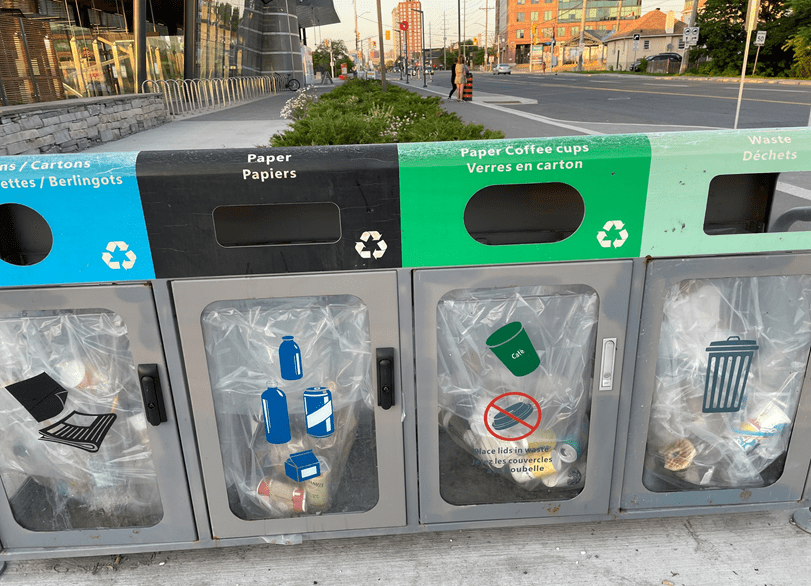
(City of Ottawa waste receptacles)
Unfortunately, Ottawa has for many years under-invested in waste management. This is obvious when compared to most other municipalities, who spend more than twice as much per household than Ottawa. The level of capital and operating spending by Ottawa is not a sign of efficiency and well-run programs but is a sign of under-investment, neglect and weak political commitment to this key piece of municipal infrastructure. Ottawa needs to play catch up.
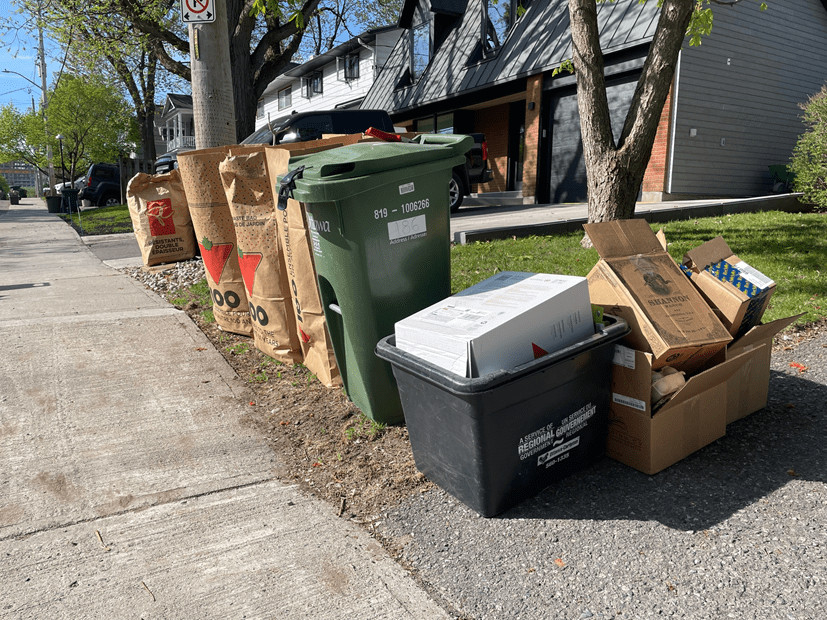
(Curbside collection day)
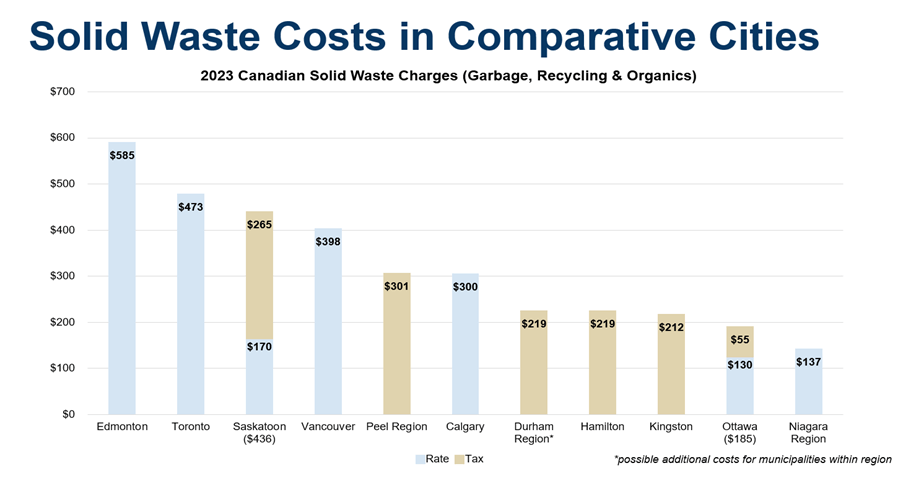
(Comparison of solid waste costs across peer Canadian municipalities: City of Ottawa)
The “zero waste vision”
The City committed to a zero waste vision in June 2021 and to the waste management hierarchy (see below), with its focus on reduction and diversion and minimizing disposal. The SWMP presents an opportunity to make that vision a reality and to hold City Council to their commitments
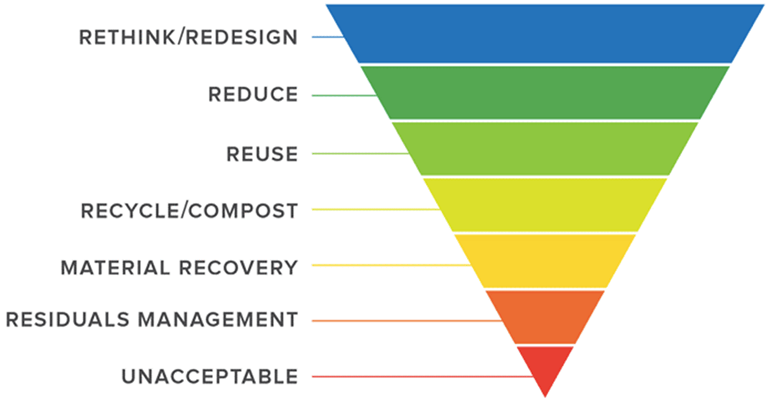
(Zero Waste International Alliance: Working Towards a World Without Waste)
50 SWMP Actions
The draft SWMP presents some 50 areas and programs for action, from using anaerobic digestion to process green bin waste, increasing promotion and education, and targeting special wastes like construction and demolition materials.
Almost without exception, all the actions cited in the draft SWMP need to be acted on and, most importantly, need to be properly funded and sustained over the long term. Of particular importance is adopting standard municipal waste management practice by implementing a garbage user pay bag / tag program to incentivize increased use of the recycling and green bin programs. Council’s decision in June 2023 to reject staff recommendations for a bag / tag program was a major blow to the objectives of the SWMP. The easy and “free” collection of garbage must end.
Landfill or incinerator?
A decision on how to manage any residual waste must be guided by sustainable waste reduction and diversion investment and policy. With a landfill there is a built in incentive to steward capacity and life expectancy. Conversely, an incinerator will need to be fed a steady and guaranteed supply of waste and operations will be governed by long term contracts that will penalize any reduction in waste delivery.
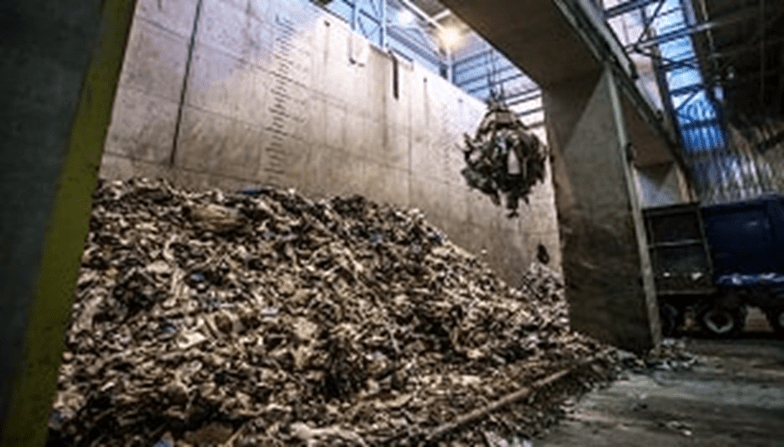
(The Durham York incinerator ( Durham York Energy Centre))
The draft SWMP suggests that acting on current plans for waste reduction and diversion, Council’s approved transfer from Trail Road of 60,000 tonnes per year of small commercial waste, plus the hoped-for approval of a new capacity at the site, could extend the landfill by an additional 14 years from 2034 to 2048. Much more needs to be done to extend disposal capacity even further, however.
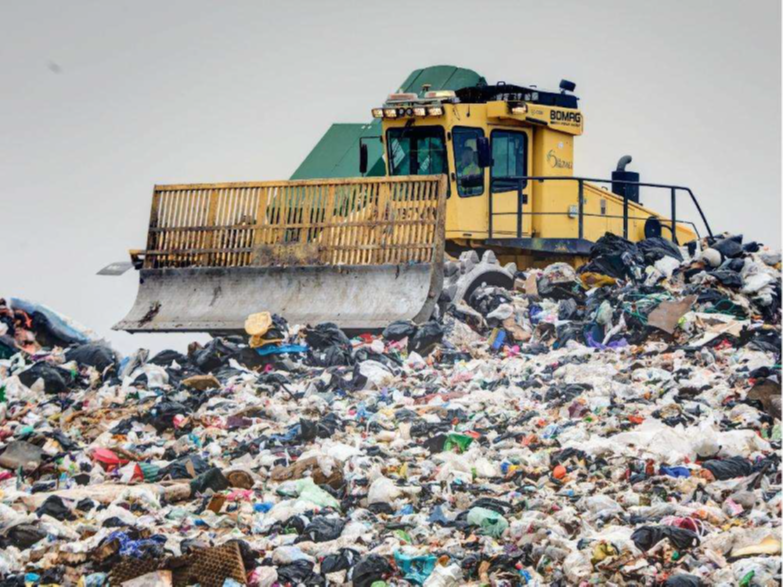
(City of Ottawa)
What will it cost?
Despite four years of work, the draft SWMP is missing some essential elements and this absence will hamper public understanding and debate. At the moment, there is no short-, medium- or long-term financial plan to support the plan’s implementation, and there is no analysis of the GHG impacts of the actions being presented. A planned analysis of landfilling, incineration and mixed waste processing of residual wastes will not be available until 2025.
WHERE DO WE GO FROM HERE?
The overriding focus going forward must be to aggressively address our current poor waste management performance, achieve waste diversion rates comparable to leading municipalities, extend the life expectancy of the Trail Road landfill and reduce GHGs associated with managing waste.
Here are some specific recommendations for action:
- Establish waste reduction and the diversion of waste from disposal as a cornerstone of all waste management policy and operations
- Support City Council’s June 2021 zero waste vision by rejecting incineration of waste as an option for residuals waste management
- Increase capital and operating budgets to address the City’s historic underfunding of waste management and properly funding priority action on waste reduction, waste diversion, recycling and organics
- Expand the Trail Road landfill current capacity to extend its lifespan for as long as possible and divert materials and restrict access from small commercial loads
- Aggressively roll out green bin service to multi-residential properties to improve organics waste diversion
- Implement anaerobic digestion for organic green bin wastes to optimize resource recovery
- Revisit Council’s 2023 rejection of a bag/tag program and implement a user pay program to address poor curbside green bin participation, and implement a clear bag waste collection program
- Establish programs to target the recovery of bulky and special wastes such as household furniture, mattresses, electronics, residential construction and demolition materials and textiles
- Increase funding for promotion and education fourfold to match the significantly larger spending per household of most municipalities, and facilitate school field trips to the Trail Road Landfill
- Include a specific Textile Waste Reduction section in the Solid Waste Master plan, including a curbside textiles pickup program pilot and an accompanying public educational campaign.
Please consider sending these in your own feedback to the City—and of course adding your own! The City’s survey is here.
SOLID WASTE MASTER PLAN BACKGROUND
The City is developing a new Solid Waste Master Plan, to be completed in 2024. The plan will guide how to manage solid waste over the next 30 years.
For many years it appeared that the city had forgotten about the importance of managing the waste that Ottawa residents generate. The last waste management master plan dated back to 2011 and for almost a decade the city chased an environmentally and financially flawed proposal from Plasco to construct a plasma gasification incinerator that it claimed could process all of the city’s residual wastes. Plasco finally collapsed in 2015 after never proving operational success, environmental concerns and failing to find the necessary capital for construction.
With an almost exclusive focus for many years on the Plasco proposal and with the exception of the launch of the green bin program there was little or no other effort made to address other aspects of waste management such as enhancing and promoting more waste diversion.
A report by Waste Watch Ottawa released in September 2017 provided a damning analysis of the neglect of the waste management files. Using the city’s own data and a provincial database operated by the Resource Productivity and Recovery Authority (RPRA) WWO confirmed the city’s very poor performance in diverting waste from disposal through the blue/black box recycling program and the green bin program (See WWO Reports) Ottawa diverted only 42.5% of its waste in 2015, a rate below the provincial average of 47.7% and well behind leading municipalities which were achieving rates of over 50% with best performers diverting over 60%.
The city finally decided to embark on a new solid waste planning exercise in July 2019. The new Solid Waste Master Plan, to be completed in 2023, will guide how to manage solid waste over the next 30 years.
All of the reports and background on the SWMP are available on the city’s Engage Ottawa website.
https://engage.ottawa.ca/solid-waste-master-plan
WWO is a member of the SWMP public consultation / Stakeholder Sounding Board.
We urge you to participate in the Solid Waste Plan engagement opportunities as they occur and to respond to surveys that the Plan has put out for public input. Results of the participation exercises are summarized in “As We Heard It” reports available on the Engage Ottawa SWMP website.
Solid Waste Master Plan Timeline
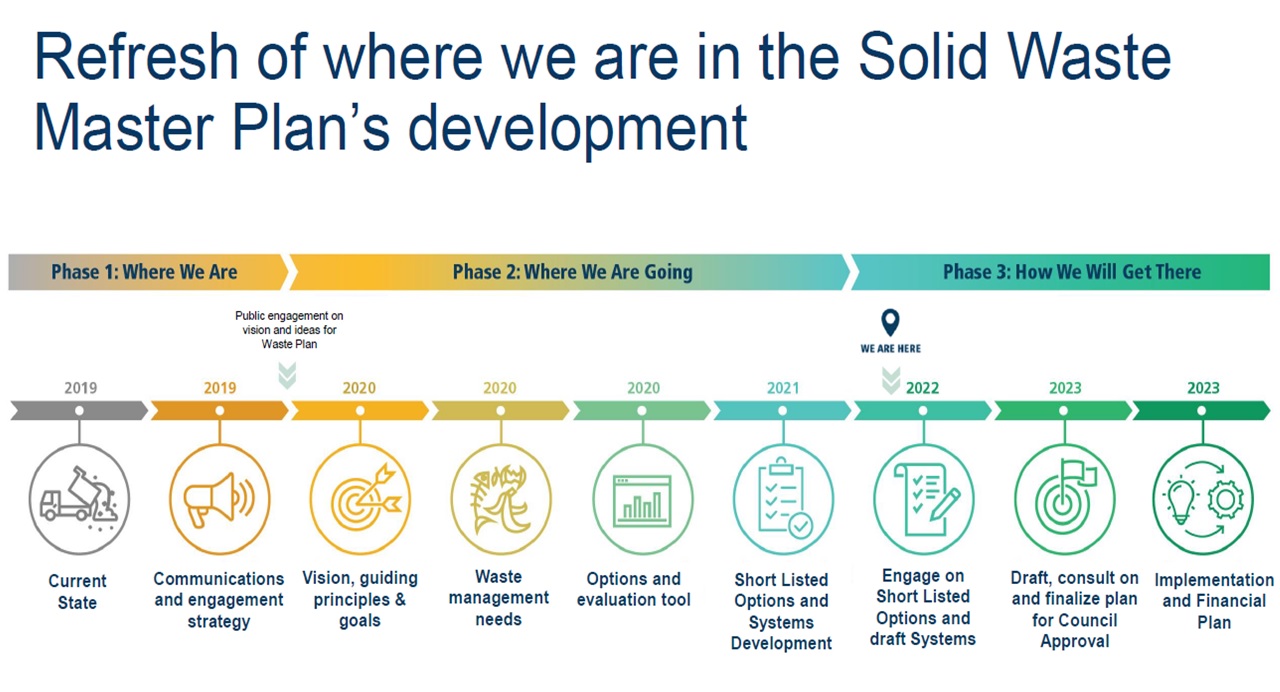
WWO Report on Ottawa’s Waste Diversion Performance
September 15, 2017
“Using City of Ottawa and provincial data, a review by Waste Watch Ottawa of the city’s residential recycling and green bin programs shows that they are performing poorly with low levels of waste diversion from disposal compared to other large municipalities in Ontario.
“Based on the city’s numbers, as reported to the provincial Resource Productivity and Recovery Authority (RPRA), Ottawa diverted only 42.5% of its waste in 2015, a rate below the provincial average of 47.7% and well behind leading municipalities which are achieving rates of over 50% with best performers diverting over 60%. In a possibly worrying sign, the RPRA reports also showed that Ottawa’s 2015 rate of waste diversion had fallen from the 45% level of 2014 and the tonnages of waste going to disposal are increasing.”
 Waste Watch Ottawa
You must be logged in to post a comment.